
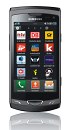
Key features
- 3.7" 16M-color Super Clear LCD capacitive touchscreen, WVGA (480 x 800 pixels), multi-touch input, scratch-resistant glass surface
- Slim and solid metal body
- Bada OS 1.2 with Samsung Apps
- ARM Cortex A8 based 1GHz CPU
- Quad-band GSM support with dual-band HSPA
- Wi-Fi 802.11b/g/n connectivity with WPS support, Wi-Fi tethering
- Built-in GPS receiver with A-GPS support, digital compass, Samsung LBS powered by ROUTE 66
- 5 MP autofocus camera with touch focus and LED flash, geotagging, face, smile and blink detection
- 720p video recording at 30fps
- 2GB internal storage, microSDHC card slot
- Standard microUSB port and Bluetooth v3.0 with A2DP
- Standard 3.5mm audio jack, TV out
- Stereo FM radio with RDS, FM recording
- Webkit-based Samsung Dolphin Browser 2.0 with Flash support
- YouTube client, Facebook and Twitter integration
- DivX/XviD video support
- Good audio quality
Main disadvantages
- Limited number of available applications
- Super Clear LCD can’t match SuperAMOLED
- Card slot under the battery
- No lens protection
- SatNav software only a 30-day trial
- No ambient light sensor to adjust screen brightness automatically
- Poor loudspeaker performance
Wave II over original Wave
- Latest Bada OS 1.2
- Swype-like T9 Trace text input
- Over-the-Air software updates
- Larger 3.7" touchscreen
It’s not a great update. Plus the first three differences over the original Wave are about to be washed away once it receives its due software update to Bada OS 1.2.
The Samsung S8530 Wave II may not be the upgrade that all users have been waiting for, but the phone runs the latest version of the Bada OS and has kept all the great features of the original: from the powerful CPU, to premium connectivity and HD video recording.
And all this is delivered on a larger 3.7-inch display. Sure, it’s no SuperAMOLED screen but Samsung promises the LCD screen is not your ordinary screen, too. You see, good things come in limited number and Samsung is pressed to supply enough SuperAMOLEDs for their Android and Windows Phone 7 operations.
Bad luck for the Wave II, even worse for the original Wave – this phone will be as good as discontinued when the stocks run out. The Wave II will take over and that’s that.
Anyway, Samsung are probably not giving up on their Bada OS. If it eventually becomes the base platform for all their midrange touch phones, they will be extremely well positioned to adapt to the new market reality.
It’s not about the business benefits or the multitasking – it’s as simple as apps. Users love to have them and makers love to sell them. Imagine being able to do that on all levels – from the most basic feature phones to the top-of-the-line smart devices. That must be enough reason for Samsung to keep their commitment to Bada.
Design and construction
It was obviously the design team’s day off. They hardly had anything to do on the S8530 Wave II. The goal was clear – don’t change anything just make the phone bigger to accommodate the larger screen.The only difference in terms of design is the navigation deck up front. The buttons below the screen do look nicer this time but are not as comfortable to use. All in all, the buttons are OK to use – just not as clicky as before.
The slim metallic body is very elegant, and just as solid. As before, the only part of the handset to have fingerprint issues is the touchscreen (despite its anti-smudge coating). The rest of the sleek Wave II body is resistant to fingerprints.
The End key doubles as a power button. It will terminate the currently running app and take you to the homescreen wherever you are in the interface. Pressing and holding the Menu key launches the task switcher.
Above the display are the earpiece and the video-call camera, along with the proximity sensor. The Samsung S8530 Wave II has no ambient light senor to automatically adjust screen brightness.
The brushed aluminum surface of the battery cover is very pleasant to touch. The whole thing is quite usable too – the rear cover will pop softly up when you pull the latch at the bottom. Underneath is the 1500 mAh Li-Ion battery.
Both the microSD card slot and the SIM compartment are under the battery. The memory card isn’t hot-swappable and that’s one design decision we’re not happy with. It was the price to pay perhaps for the extra slim metal unibody. On a positive note, the phone handles a 16GB microSDHC card trouble-free.
The Samsung S8530 Wave II is the successor that the circumstances have forced on the original Wave.
These are virtually two identical phones: the attractive styling and solid build go without saying. The Wave II is just bigger and manlier that the original – a guy’s gain is a gal’s loss we’re afraid. But in the end, it all boils down to the screen – and we don’t mean size this time. It’s Super Clear LCD against SuperAMOLED. We have the score on the next page.


No comments:
Post a Comment